How to Choose the Best Breathable Mattress Cover from China?

Choosing the best Breathable Mattress Cover from China requires more than comparing fabric names or factory prices. The material should manage heat, moisture, friction, and repeated washing. It should also fit the mattress precisely, without noisy plastic movement.

The global mattress market continues expanding, while consumers increasingly value temperature regulation and healthier sleep environments. Grand View Research reported continued growth in the global mattress market, driven partly by premium and wellness-focused products. Textile Exchange’s Materials Market Report 2024 also showed polyester remained the most widely produced fiber worldwide. That matters because polyester can dry quickly, but its comfort depends heavily on yarn structure, knitting design, and finishing quality. A high percentage alone proves little.

Sleep expert Dr. Matthew Walker has said, “Sleep is the single most effective thing we can do to reset our brain and body health each day.” His statement explains why bedding performance deserves careful testing. A reliable Chinese supplier should provide air-permeability results, moisture-vapor data, fabric composition, shrinkage rates, and laboratory test records. Look for OEKO-TEX Standard 100 or comparable chemical-safety documentation. Ask whether the waterproof membrane blocks airflow.

Small details reveal quality. Check the elastic stitching around corners. Rub the surface against cotton sleepwear. Listen for crinkling. Request samples after several wash cycles.

Do not trust attractive photographs alone.

A breathable cover may still feel hot if the room is humid or the mattress foam retains heat. Factory audits, sample testing, and clear specifications remain essential. The best choice is not always the cheapest one, and not every “cooling” claim survives real-world use.
How to Choose the Best Breathable Mattress Cover from China?

Define Breathability: Air Permeability and MVTR Under ASTM D737 and E96

How to Choose the Best Breathable Mattress Cover from China?

Breathability has two measurable meanings: air permeability and moisture vapor transmission. ASTM D737 evaluates how easily air passes through a fabric under a controlled pressure difference. Results may appear in cubic feet per minute per square foot or millimeters per second. Higher airflow can improve ventilation, but it does not automatically mean better sleeping comfort. A loose woven fabric may breathe well while offering limited liquid protection.

ASTM E96 measures water vapor transmission rate, or MVTR, through a material. Results are commonly reported as grams per square meter per day. This test helps assess how efficiently perspiration vapor can escape. Testing conditions matter greatly, including temperature, humidity, cup method, specimen direction, and exposure time. Ask suppliers for the complete report, not only the highest number.

In practical mattress-cover evaluations, inspect the entire construction. A breathable top layer can lose performance after lamination, quilting, or waterproof-film bonding. Request samples with the same thickness and seam structure used in production. Check for edge leakage during testing. A clean laboratory result may still mislead if the finished cover feels hot or traps moisture overnight. I would also question unusually high claims, because small testing differences can create large comparisons. Choose data that is repeatable, traceable, and relevant to your intended sleeping environment.

How to Choose the Best Breathable Mattress Cover from China?

Air Permeability and MVTR Under ASTM D737 and ASTM E96

Breathability should be evaluated using two complementary measurements: air permeability, reported in L/m²/s under ASTM D737, and moisture vapor transmission rate (MVTR), reported in g/m²/day under ASTM E96. Higher values generally indicate easier airflow or faster moisture-vapor transfer.

The chart uses representative, non-brand benchmark values for common mattress-cover constructions. Actual results vary with fabric weight, thickness, coating, pore structure, humidity, temperature, and the specific ASTM E96 test method. Request a laboratory test report for final product selection.

Compare Cover Fabrics by GSM, Airflow, MVTR, and Fiber Composition

How to Choose the Best Breathable Mattress Cover from China?

When comparing mattress covers from China, start with GSM, not marketing language. GSM means grams per square meter and shows fabric weight. A 120 GSM cover may feel cooler than a 220 GSM cover. However, weave density and finishing can change airflow significantly. Do not judge breathability by softness alone.

Airflow testing shows how easily air passes through the fabric. Ask suppliers for test conditions, sample size, and measured results. MVTR measures moisture vapor transmission rate, often in grams per square meter per day. A higher MVTR usually supports faster moisture release, but testing methods must match. Otherwise, the numbers can mislead.

I once compared two samples using different test standards. The result looked useful, but it was not a fair comparison.

Fiber composition also matters. Polyester can provide strength and dimensional stability. Polyamide may feel smooth and resist abrasion. Cellulosic fibers can improve moisture handling, but they may shrink or lose strength without careful finishing.

Blended fabrics often balance comfort, durability, and cost. Request fiber percentages, fabric construction details, and wash-test records.

Then inspect a sample after repeated washing, not just from the package. Check a bedroom-like setup: warm skin, light pressure, and a humid room. The cover should not trap heat under the sheet. Supplier documents help, but physical testing remains essential.

Check China Suppliers Through ISO 9001, OEKO-TEX, and AQL 2.5

How to Choose the Best Breathable Mattress Cover from China?

A reliable supplier check starts with documents, not attractive product photos. ISO 9001 confirms a quality management system, but it does not certify fabric performance. Verify the certificate scope, factory address, issuing body, and expiry date. Ask for production records covering stitching, zipper strength, fabric weight, and air permeability. Textile Exchange’s 2024 Materials Market Report states that global fiber production reached 124 million tonnes in 2023. More production increases the need for traceable materials and controlled processes.

OEKO-TEX certification adds a chemical safety checkpoint. Request the certificate number and confirm that it covers the exact mattress cover fabric, coating, and thread. A valid certificate should match the tested fiber composition. AQL 2.5 then supports shipment inspection. It normally allows a limited number of defects within a defined sample size; it does not mean defect-free production. Inspectors should check stains, skipped stitches, broken zippers, odor, dimensions, and packaging. Include moisture vapor transmission testing when “breathable” is a key claim.

Tips: Ask for a recent inspection report, not only a certificate copy. Compare lab results with your own sample. I have seen suppliers pass document checks but miss size tolerances during bulk production. That gap deserves attention. Define AQL 2.5 before ordering, record critical defects separately, and approve a sealed reference sample. Never rely on one test or one visit.

Evaluate Waterproofing, Seams, Fit, and Durability Using ASTM D751

How to Choose the Best Breathable Mattress Cover from China?

A breathable mattress cover must balance airflow with reliable waterproofing. ASTM D751 can help evaluate coated fabric performance, especially hydrostatic resistance and fabric strength. Ask the supplier which D751 procedures were used. The report should show test pressure, specimen size, conditioning, and failure points. A single pass result is not enough. Testing conditions can change the outcome.

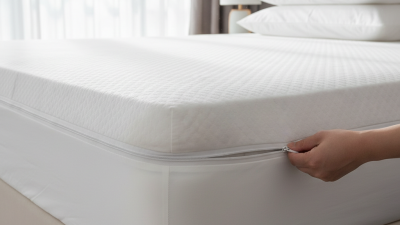
Inspect the seams closely. Look for even stitching, sealed needle holes, and stable seam tape. ASTM D751 data may support fabric evaluation, but it does not replace a practical seam inspection. Place a sample over a mattress and check corners, elastic tension, and movement during use. Fit is unforgiving. A loose cover may wrinkle under the sleeper, while excessive tension can stress the seams. Measure the cover before and after washing. Record shrinkage and loss of elasticity.

Durability requires more than a strong first impression. Request repeated washing, flexing, and leakage checks, even when those tests extend beyond ASTM D751. Examine the fabric after folding it repeatedly. Does the coating crack? Does the surface become noisy or stiff? I have found that polished samples can hide weak construction. That is worth questioning. A reliable supplier should provide traceable sample records, consistent production measurements, and clear explanations for any failed test. Do not accept vague claims such as “laboratory approved.” Ask what was tested, how it was conditioned, and whether the tested material matches your production order.

How to Choose the Best Breathable Mattress Cover from China? - Evaluate Waterproofing, Seams, Fit, and Durability Using ASTM D751
Evaluation Dimension Recommended Test Method Acceptable Buying Target Preferred Performance Range Why It Matters Purchasing Decision
Waterproof Hydrostatic Resistance ASTM D751, hydrostatic pressure procedure At least 1,500 mm H₂O before leakage 2,000–3,000 mm H₂O Indicates how well the waterproof barrier resists liquid pressure from spills, sweat, and repeated use. Strong protection
Waterproof Barrier Integrity After Washing ASTM D751 before and after 10–20 home-laundry cycles No visible leakage after washing Less than 10% reduction in hydrostatic resistance A cover may pass an initial test but lose waterproof performance when the polyurethane film or coating is repeatedly washed. Suitable for regular use
Seam Leakage Resistance ASTM D751 hydrostatic test applied across stitched and sealed seams No leakage at the side seams, corners, or zipper area Seam performance at least 90% of the main fabric Seams and zipper zones are common failure points, even when the main waterproof fabric performs well. Key quality requirement
Seam Construction Visual inspection and production specification review Overlocked or bound seams with secure bartacks at stress points Stitched seams reinforced with waterproof tape or welded construction Reinforced construction reduces fraying, seam opening, and leakage during mattress installation. Preferred construction
Air Permeability ASTM D737 At least 20 L/m²/s for a breathable sleep surface 40–100 L/m²/s, depending on fabric weight and membrane design Higher air permeability generally improves heat and moisture dissipation, although it must be balanced with waterproofing. Better comfort
Moisture Vapor Transmission ASTM E96, upright or inverted cup method At least 1,000 g/m²/24 h 1,500–3,000 g/m²/24 h Shows how effectively water vapor can pass through the cover while liquid water is blocked. Recommended for warm climates
Fabric Tensile Strength ASTM D5034 or ASTM D5035 Warp and weft strength suitable for repeated fitting At least 400 N in both principal directions for medium-weight constructions Higher tensile strength helps prevent tearing when the cover is pulled over thick or tight mattresses. Good handling durability
Tear Strength ASTM D1424 or ASTM D5587 At least 15 N in both principal directions 25–40 N or higher Important for resisting damage from corners, zippers, sharp mattress labels, and accidental snagging. Preferred for commercial use
Abrasion Resistance ASTM D4966, Martindale or equivalent abrasion protocol At least 20,000 cycles without hole formation or coating failure 40,000–60,000 cycles for frequent-use applications Measures resistance to friction caused by sleeping, turning, laundering, and mattress movement. Longer service life
Dimensional Stability After Washing AATCC 135 or ISO 6330 washing procedure Length and width change within ±5% Within ±3% Excessive shrinkage can create poor fit, zipper stress, corner lifting, or difficulty during installation. Stable fit
Mattress Fit and Skirt Elasticity Dimensional measurement and repeated fit trial Cover accommodates the stated mattress height with 3–5 cm installation tolerance Elastic skirt recovery of at least 85% after repeated stretching A correct fit prevents shifting, bunching, noise, and exposed mattress edges. Confirm before ordering
Zipper or Closure Performance Manual cycling and visual inspection At least 100 open-and-close cycles without tooth separation 300–500 cycles with covered or protected zipper construction The closure must remain functional without creating a major leakage path or damaging the mattress. Inspect samples carefully
Surface Noise and Hand Feel Physical sample assessment No sharp plastic feel or disruptive crinkling during movement Knitted polyester or cotton-blend face fabric laminated with a quiet polyurethane membrane Soft, low-noise materials improve sleep comfort and reduce customer complaints. Comfort-sensitive item
Colorfastness to Washing and Perspiration AATCC 61 and AATCC 15 or equivalent ISO methods Grade 4 or better for color change and staining Grade 4–5 Helps maintain appearance and prevents dye transfer after repeated washing or contact with perspiration. Suitable for retail quality
Chemical and Material Safety Applicable market requirements such as REACH, CPSIA, or buyer restricted-substance list Current third-party laboratory report for the exact material and color No detectable restricted substances above applicable legal limits Compliance documentation reduces import, safety, and marketplace risks. Require documentation
Quality Control Documentation Pre-production sample, inline inspection, and final random inspection Inspection records linked to the same fabric, coating, color, and size as the order Independent laboratory report plus batch-level inspection records Testing is meaningful only when the documented sample matches the production goods. Best sourcing practice
Overall Selection Threshold Weighted supplier evaluation Pass waterproofing, seam, fit, safety, and wash-durability requirements No critical failure and a total score of at least 85/100 A balanced score prevents selecting a cover that is waterproof but uncomfortable, poorly fitted, or short-lived. Recommended shortlist level

Choose by Climate and Care: MVTR Targets, Washing, and Shrinkage

Choosing a breathable mattress cover from China starts with your local climate, not a supplier’s sales description. In hot, humid rooms, look for an MVTR near 5,000–10,000 g/m²/24h. For stronger heat and moisture control, consider higher results. Compare only tests using the same method. MVTR numbers can look impressive but remain difficult to compare.

I ask suppliers for fabric composition, test reports, and samples from different production batches. A cover may feel cool in a showroom yet trap heat after eight hours of sleep. Check the membrane, surface fabric, and elastic panels together. Measure the sample before washing. Then wash it at the intended temperature and record its size. Measure twice.

Care instructions often reveal more than product photos. Many covers perform well at 30°C, but repeated hot washing can weaken coatings or distort fitted edges. Ask for results after five or ten wash cycles. A shrinkage rate below 3% is a practical target for fitted covers, though construction affects the final fit. One sample is not enough. I have seen a comfortable cover lose its shape after drying, despite excellent initial MVTR. Air drying may protect the material, while high heat can create avoidable problems. Request clear washing symbols, drying guidance, and a written tolerance for shrinkage before placing a larger order.